Awesome Agave: Three Mezcal and a Raicilla

August 6, 2023

Just as Serge enjoys the odd rum or -gnac, we enjoy the odd rum, mezcal, etc. In fact, I love the stuff, and wish I had access to a better selection. Well, I've scraped together quite a few gems for today, so I can't complain too much.

Juan Manuel Pérez Juárez (San Luis Potosí, Mexico) – Derrumbes 'San Luis Potosí' Mezcal Artesanal, Salmiana, Lot 27, 11-19, 44.4%
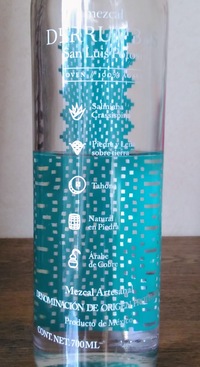
Picture of bottle Juan Manuel Pérez Juárez (San Luis Potosí, Mexico) – Derrumbes 'San Luis Potosí' Mezcal Artesanal, Salmiana, Lot 27, 11-19, 44.4%

Derrumbes have offered good QPR in the past; I really enjoyed their Durango, which was my first bottle of mezcal. Let's see about this one.

Nose It's green - raw green pepper, padron peppers, jalapenos, big bunches of spearmint and peppermint. Mild sweetness, drop of lemon juice and white pepper, a little barn/manure funk? This is really aromatic, not massively complex but very nice.

Palate Nice arrival, with a decent perceptual sweetness, candied padron peppers, gently smoky, earthy. Very good full coating texture. A little cream cheese, more of that mint, remains pleasantly sweet, savoury, earthy, with a slight citric and mineral grip, going on quite long. Can take a drop of water but pretty much perfect at strength.

Comments The price on this is creeping up but at around €40 this was a steal and it remains very good at a slightly higher price. Not super complex but a lot of character and very drinkable, holding its own in this line up. Another winner from Derrumbes.

Price around €45 per 70cl.

Score?7/10

Atenogenes Garcia (Oaxaca, Mexico) – 5 Sentidos, Madrecuixe/Espadin/Bicuixe, 2021, EN3MO2-21, 101 bottles, 58.3%
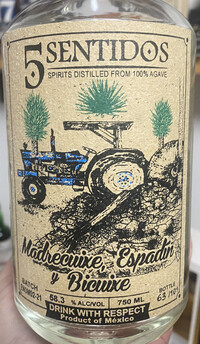
Picture of bottle Atenogenes Garcia (Oaxaca, Mexico) – 5 Sentidos, Madrecuixe/Espadin/Bicuixe, 2021, EN3MO2-21, 101 bottles, 58.3%

101 bottles for the Aficionados group of spirits nerds. 39% Madrecuixe, 36% Espadin, 25% Bicuixe, bottled at still strength – not too common too see such a proof in this world, but very welcome.

Nose Very punchy and a nice sharpness: apple pie with plenty of cinnamon, toast, lots of cider vinegar, sage, thyme, oyster mushrooms. A little marzipan. It's quite high toned, and a touch solventy. This is really nice, love that streak of acid, and the mix of sweet and savoury notes just works. Later there is some papaya, canteloupe, and pool water.

Palate Punchy, with a good sweetness, powdery (talc?), grapes. Develops on those mushrooms, lamb's ear, grapefruit mercaptan (the meeting point of grapefruit and alliums?). Then that apple pie appears with all that sweet cinnamon. Very mineralic, limey finish, rather long, with some musty attic, old shed and hazelnuts.

Comments Oh, this is really good. Worth taking some time, and adding some water.

Price around €126 per 75cl.

Score?7+/10

Miguel García Jarquín (Oaxaca, Mexico) – NETA, Madrecuixe/Bicuixe/Jabalin, 2020 release, ENSMGS1911, 71 bottles, 50.7%
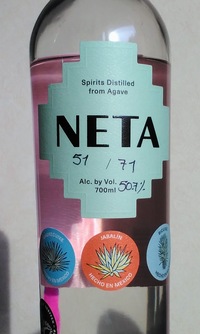
Picture of bottle Miguel García Jarquín (Oaxaca, Mexico) – NETA, Madrecuixe/Bicuixe/Jabalin, 2020 release, ENSMGS1911, 71 bottles, 50.7%

One of these tiny batches from NETA, this one for Europe. Another field blend, similar to the Cinco Sentidos but with Jabalin in the place of Espadin. NETA state: "We we able to purchase half of this batch while the rest was sold locally to friends of the family".

Nose This one is rather weirder, and has many layers. On the one hand there is a big perceptual sweetness that runs along the lines of sweet potato, cooked pumpkin, but also candy necklace. Then there is slate, honey, okra, charring sage. A few drops of balsamic vinegar and slightly solventy (but nice) high tones. It's carried by an elegant puff of smoke from a coal barbecue. Actually it smells an lot like a old garden shed, with bags of charcoal and compost, mothballs, and few old banana skins for good measure. This rewards some patience, really rather complex.

Palate Bold and grippy, rather floral (laundry powder, violets) at first, develops on earthy root veg, then sweet balsamic vinegar, candy necklace. A little water resolves things slightly, giving everything more room. Cream cheese joins, along with some sweet pink grapefruit and that coal smoke. Very long finish, with earthy sweet potato, sage and mushrooms.

Comments Typically high quality NETA. Give it some time. I found this floral dominant on the palate for a while, but it's gradually revealing its subtle charms.

Price around €110 per 70cl.

Score?8-/10

Don Luis Contreras (Jalisco, Mexico) – La Venenosa Raicilla 'Sierra del tigre', 100% Inaequidens, Lot 9, 01-16, 46.5%
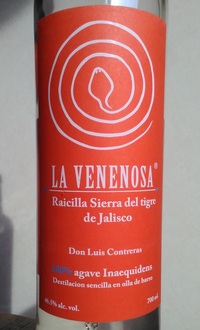
Picture of bottle Don Luis Contreras (Jalisco, Mexico) – La Venenosa Raicilla 'Sierra del tigre', 100% Inaequidens, Lot 9, 01-16, 46.5%

I'm very far from an expert on agave spirits, so I recall for myself that Raicilla is agave distillate from Jalisco. There several batches of this Sierra del Tigre out there, some with different varietals. I highly recommend the report on Mezcalistas, which includes some photos and information on Don Luis Contreras and his distillery. The bottle has quite a lot of tiny floaters and sediment: delicious precipitate.

Nose Punchy, hugely fruity and lactic: a mixture of mango candy, fresh orange juice, orange Fox's glacier fruits, nacho cheese powder. There's also a fatness, sunflower seeds, salty blue cheese, and sour cream. Cucumber and mint provide some freshness, along with higher solventy tones. Later there are sweet yellow and orange bell peppers on a coal grill, cream cheese, white and pink peppercorns.

Palate Really luxurious from the off; almost gloopy and, dare I say, smooth. The flavour is rich, exploding with orange and mango, some mustiness, grapefruit mercaptan, sweet peppermint tea, sage, and cool ranch Doritos (trust me, it works). This is so fat, a total texture bomb. The finish is very long with a remarkable development in which oranges fade before suddenly resurging many seconds later, this time with a little bitterness of the peel. It can take a drop of water too, which amps up the creaminess.

Comments I love this bottle and regret not buying more when I had the chance. Not the most complex agave distillate out there, but just so good. Very much in agreement with Different Spirits that the texture makes this, though I found perhaps a bit less cheese and more fruit in this batch.

Price around €100 per 70cl.

Score?8/10
Plum Encore

June 27, 2023

We still had a few plum samples left over from our previous session, so let's try those today, semiblind.

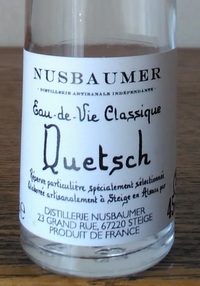
Nusbaumer (Alsace, France) – Quetsch (Wild Plum), c. 2022, 45%

Picture of bottle Nusbaumer (Alsace, France) – Quetsch (Wild Plum), c. 2022, 45%

Some sources translate quetsch as damson, some as prune plum. I will simply call it a wild plum: it seems to be a cultivar unique to the region.

Nose Much bigger than the others. Very jammy but not immediately plum, more prune. Tons of prune in fact. A little bright headiness, orange and lemon oils. A little almond, and later prune ice-cream. Big, but a bit monolithic. I am guessing this is the Nusbaumer.

Palate Quite a hot arrival, then immediately jammy prune, and quite a bit of florality - that stewed jasmine tea from our last session again, but it does not dominate. Not much development, but it holds on quite long. Water helps a lot, making the arrival much more measured. Still mostly on prune, without cloying, and nicely balanced by mild tannic tea and floral notes.

Comments Lacks some complexity, but delivers a lot of flavour at a fair price.

Price around €36 per 70cl.

Score?6/10

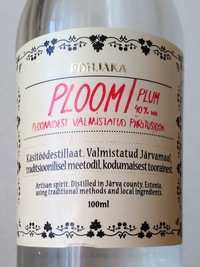
Põhjaka (Järva, Estonia) – Ploom (Plum), bott. 13/04/2022, 40%

Picture of bottle Põhjaka (Järva, Estonia) – Ploom (Plum), bott. 13/04/2022, 40%

We weren't too impressed with the rowanberry, but let's give them another shot.

Nose Quite muted, the fruit is slightly anonymous but there are definitely whiffs of plum, slightly underripe. Also a hint of straw.

Palate Better here, quiet arrival backed up by a slight sweetness with lots of (mostly) unripe plum and a touch of rubber. Not much development, but a little white pepper shows up in the finish, which is medium at best. Water doesn't help either the nose or palate.

Comments Not much to smell, but easy to sip, if very simple.

Price around €35 per 35cl.

Score?4/10

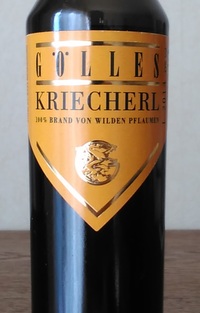
Gölles (Styria, Austria) – Kriecherl (Damson), L. 2014, 43%

Picture of bottle Gölles (Styria, Austria) – Kriecherl (Damson), L. 2014, 43%

The meaning of Kriecherl seems to vary: sometimes denoting a mirabelle, sometimes a damson. Here, Gölles explicitly state the plums are blue, and claim 13kg of fruit per litre.

Nose Again slightly quieter, and not very plummy. Pencil eraser, rubber band, plum stones, a little sea water. Water helps, adding a touch more sweetness and fruit, mostly underripe, but it remains a bit quiet. I don't love the rubbery notes here.

Palate Slightly hot at first, then some fruity green peppercorns, crunchy green plums, that sea water again, fruit stems, a distant florality, and plum vinegar. This is weirdly funky, not an easy one. With water it sweetness up a bit, a tiny dollop of compote made from underripe plums. More mixed peppercorns, all the colours. The finish is medium, with some tannic dryness.

Comments A bit weird, the nose is too quiet and it's hard to see the plum here. Still, it's original and I kinda like it.

Price around €70 per 70cl.

Score?6-/10

Kirsch Quartet

June 24, 2023

Today, a semiblind of cherry eaux-de-vie.

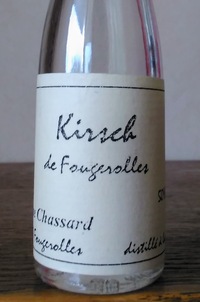
Kirsch et Terroir, Ferme Chassard (Haute-Saône, France) – Kirsch de Fougerolles, bott. ~1990, 50%

Picture of bottle Kirsch et Terroir, Ferme Chassard (Haute-Saône, France) – Kirsch de Fougerolles, bott. ~1990, 50%

This older miniature from an eBay job lot had a good cm or two of evaporation. Fougerolles has long been noted for its Kirsch, which finally acquired AOC status in 2010.

Nose Rich and ripe. Cherry drops, menthol cherry 'Tunes' lozenges, cherry gummies (sour and non-sour), cherry wood. Very round, super aromatic without attacking the nose at all. Blind, this has the same general (still?) signature as the KeT quetsch, I would bet money on the identity. I like this a lot, although it is a bit more rustic compared to the others.

Palate Punchy but a tad muted at first, perhaps reduced by strength. With water, mineralic, powdery, at first, then jammy cherry, a touch of tannic cherry skin, cherry menthol lozenges, and an old smoking jacket. Flavour-wise it's a touch hollow. Quite a nice oily finish though, holding on medium long.

Comments It falls down on the palate, but still rather good. I love that there is a shared identity between this and their plum distillate, while not sharing any "flavour" notes. Perhaps not in the best condition given the evaporation. If the quality is anything like this in today's bottlings, this is a steal.

Price unknown, but €31 per 70cl on the 2019 price list.

Score?6/10

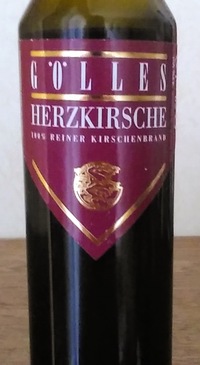
Gölles (Styria, Austria) – Herzkirsche (Heart Cherry), 43%

Picture of bottle Gölles (Styria, Austria) – Herzkirsche (Heart Cherry), 43%

Gölles claim 10kg of fruit per liter. Rested 2 years in glass.

Nose Slightly more sour, brighter than [the Ferme Chassard] more on high quality cherry yoghurt with sweet and sour cherries. Actually lots of dark cherries now too, very fresh and ripe ones. More nuanced than [the Ferme Chassard], also moving in a slightly more floral cherry blossom direction, and cherry pits. Like this a lot, although it's a hair quiet.

Palate Mild arrival, suggesting a lower strength, and quiet at first before stretching out nicely on that dark cherry yoghurt, becoming sweeter at first, cherry gummies, then a touch tannic, on cherry skins. The finish is medium long, with a touch of menthol, cherry wood, and black pepper. It drinks best without water.

Comments Very well made, aromatic and tasty. Asking for just a little higher strength, 48%?

Price around €70 per 70cl.

Score?7/10

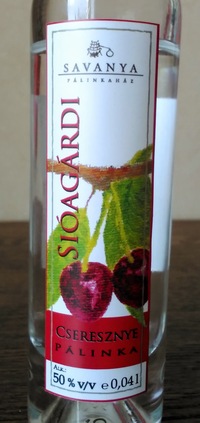
Savanya (Tolna, Hungary) – 'Siógárdi' Cseresznye (Cherry) Pálinka, L. 21/10/31, 50%

Picture of bottle Savanya (Tolna, Hungary) – 'Siógárdi' Cseresznye (Cherry) Pálinka, L. 21/10/31, 50%

Sour cherries (meggy) are perhaps more common in the world of pálinka, but this one is from a more typical cultivar.

Nose This one is quiet, and fairly neutral. I would struggle to say this has anything to do with cherry. Raw asian pear, almonds, lemon juice? A little alcohol nip. Perhaps cherry stones if I'm reaching. It can take a drop of water, which gives a touch more sweetness.

Palate Relatively hot, and again relatively little to do with cherry. Raw asian pear, becomes quite spicy. I don't like this unfortunately. It's a bit of a mess. A drop of water does help, and there is the faintest suggestion of cherry, with an emphasis on suggestion.

Comments This one just did not stand a chance. At best we can say the nose isn't too bad, and it can take a little water. At least it's fairly inexpensive. We have Savanya's apricot, so they have another chance!

Price around €20 per 50cl.

Score?3/10

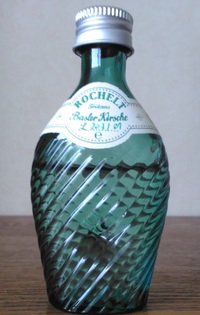
Rochelt (Tyrol, Austria) – Basler Kirsch (Basel Cherry), L. 207/21, 50%

Picture of bottle Rochelt (Tyrol, Austria) – Basler Kirsch (Basel Cherry), L. 207/21, 50%

Not sure about the vintage, but probably the 2008 or 2009, rested for 12 or so years.

Nose This is delicious. Closer to [the Gölles] now, but with the volume turned up a bit. It feels quite dense, concentrated and pure. Full of dark, ripe cherries, compote, yoghurt, a few sour cherries too. Certainly blossom as well, and perhaps a cherry hand cream. It's just a hair spiky, but we'll see about water. It certainly takes a drop, remaining delicious, with cherry sherbet and uncooked pastry [Ed: is this a Rochelt signature?] joining. The best nose here but only just ahead of [the Gölles].

Palate Neat, again really rather concentrated. Perfumed at first (blossom), gradually unfurls on sweeter dark cherry compote. With water it unwinds a bit, again on blossom at first, then fruit, rather creamy and sweet. The finish is medium long, a touch salty, mineral, ethereal. This screams Rochelt to me. [Ed: not wrong.]

Comments I would buy the Gölles, even if this shows a touch more finesse and volume – not enough to earn a higher score.

Price around €280 per 70cl.

Score?7/10

A Bag of Brut de Colonne

June 17, 2023

It's hot, so let's try some eaux-de-vie de canne à sucre from the French carribean, better known as rhum agricole. The twist: they're all at hair-raising still strength. Tasted semi-blind.

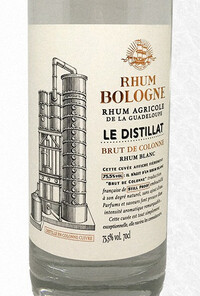
Bologne (Basse-Terre, Guadeloupe) – Le Distillat, 75.5%

Picture of bottle Bologne (Basse-Terre, Guadeloupe) – Le Distillat, 75.5%

One of the more premium cuvées from Bologne, with a premium price tag. There are several batches of this now; this one is a blend of red and black cane, but there is also a 100% black cane version. Rested for 18 months. Check out Dunder Punk's review for another take on this, and the black cane version!

Nose Almonds, oranges, slightly high toned, a bit closed but noseable at strength. With water, mineral oil and ripe pears in the distance, a little rubber dinghy.

Palate Neat, it's clean but closed. Gets hotter with water at first, but eventually opens up. Very mineralic, salt, rubber dinghy (but nice), quiet. Sloes, and a mild perceptual sweetness (cane juice). Finish is medium, with black pepper joining.

Comments Requires a fair bit of water. Well made, elegant, but lacks some excitement; especially for the price. You have to like this more ethereal style.

Price around €70 per 70cl.

Score?6-/10

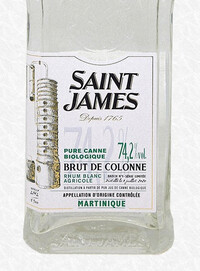
Saint-James (Sainte-Marie, Martinique) – Brut de Colonne Bio 2020, 74.2%

Picture of bottle Saint-James (Sainte-Marie, Martinique) – Brut de Colonne Bio 2020, 74.2%

Organic juice, still strength. This one hugely impressed the Lone Caner. I had been less impressed until this semi-blind revisit. Nothing better than a blindsiding.

Nose Pungent, briny, slightly burning rubber, slightly nutty, lime and orange wine gums. Feels rather closed, under the veil of the strength. With water, remains briny but the fruity side gains enormously: ripe pears, orange and mango juice. Lots of olives now too. Very nice!

Palate Neat, it's closed but rather palate enveloping, oily. With water, it becomes creamy, and a lovely fruit structure appears, reminding us of Neisson. There is a long development, gradually unfolding fresh orchard fruits and fruit gums, coconut flesh, walnuts, some distant blue cheese, fresh cane and peppermint. Long, elegant chewy finish that clings.

Comments A great surprise. I have tasted this briefly before but was underwhelmed, so did not suspect this was the Saint James. Recommended, but play with dilution.

Price around €50 per 70cl.

Score?7/10

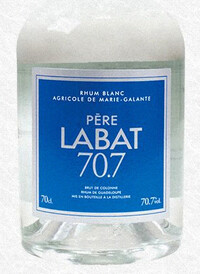
Père Labat (Marie-Galante, Guadeloupe) – Brut de Colonne, 70.7%

Picture of bottle Père Labat (Marie-Galante, Guadeloupe) – Brut de Colonne, 70.7%

Père Labat is the make from Poisson distillery. Ed: score revised from 6 to 7- on retasting.

Nose Very distinctive, frankly easy to identify. Freshly opened tennis balls, slow cooked tomato soup, basil, brine, mixed olives, this is deeply savoury and rather funky, nice! This all remains with dilution, if losing some concentration.

Palate Big, hot at strength, but many characteristics of the nose present. With water, it's not so impressive as the nose, but still nice, rather on tennis balls, brine, and spearmint. With water, quite a long finish, remaining minty, briny, and slightly nutty with a touch of rubber.

Comments Unusual, distinctive, rather good. The 72 hour fermentation is felt, with those sauvage, clairin-esque edges.

Price around €55 per 70cl.

Score?7-/10

Oddballs: Pumpkin, Beetroot, Cumin

June 11, 2023

Off the beaten track today, but in their respective locales these seeming outliers are in fact not so uncommon. These were tasted unblind, since they rather give themselves away, and we have no other sparring partners.

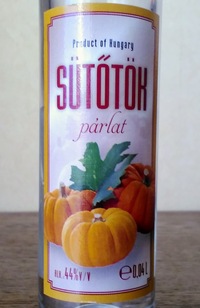
Sziczek (Jász-Nagykun-Szolnok, Hungary) – Sütőtök (Pumpkin) Párlat, 44%

Picture of bottle Sziczek (Jász-Nagykun-Szolnok, Hungary) – Sütőtök (Pumpkin) Párlat, 44%

According to sutotokinfo.hu, Hungarian pumpkin distillate cannot legally be called pálinka because pumpkin is not a fruit. Interesting, because it is a fruit, but I suppose we get the idea. Párlat is the term that stands in. Sziczek are a well regarded producer who also operate the House of Hungarian Pálinka shop in Budapest. I do find it curious that their brand does not appear on the front label, though it does on the back.

Nose Woah, this is some weird stuff – in a good way. Barnyard, overripe/spoiling raspberries, pet shop, bitter gourds, spaghetti squash, and yes, pumpkin (cooked, sweet). Pungent, estery and aromatic, a lot going on. Rather wild, risks being sickly and offputting but doesn't quite go there. Water brings out a little fruity bubblegum (mango?).

Palate Strong arrival, rather intense and concentrated. Goes on to present most of what's there on the nose, balancing fruit, farm and cucurbits galore, with a mild perceptual sweetness. The raspberry-driven fruity side is really unexpected but very nice. Just a tad hot, but mostly tamed by a small amount of water. Hangs on quite long too, without much development.

Comments Now this was unexpected! Hard to score. Slightly more intellectual than quaffable, but pretty damn good and absolutely recommended as something to try. Parts of this were reminding me of Vaval's clairin, strangely enough.

Price around €35 per 50cl.

Score?7/10

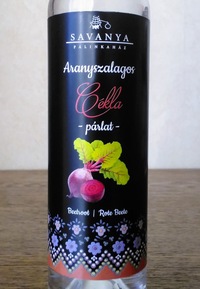
Savanya (Tolna, Hungary) – 'Aranyszalagos' Cékla (Beetroot) Párlat, L2109012, 44%

Picture of bottle Savanya (Tolna, Hungary) – 'Aranyszalagos' Cékla (Beetroot) Párlat, L2109012, 44%

A fairly small operation in the south, who also distill for home producers. Savanya bottle some of their stuff at 50%, but judge a lower proof to be more suitable for their Aranyszalagos range. The "best before" reads "unlimited time", reassuringly.

Nose Very earthy, just handfuls of dark earth. Second to that, the sweeter side of beets. Some ethanol, a little thyme.

Palate Quite hot, mineralic (vermiculite?), then settles down on straight up raw beetroot and earth. Quite a long finish, with the earth hanging on.

Comments Not bad, worth trying but not really memorable, unless you adore earthy beets.

Price around €47 per 50cl.

Score?4/10

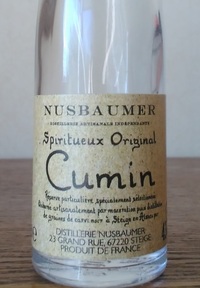
Nusbaumer (Alsace, France) – Cumin Spiritueux, c. 2022, 43%

Picture of bottle Nusbaumer (Alsace, France) – Cumin Spiritueux, c. 2022, 43%

We'll follow the French term spiritueux to categorize distilled infusions. It seems that several producers in Alsace distill cumin infusions. Black caraway, aka nigella seeds were used here.

Nose Very aromatic: lemon zest, toasting cumin, caraway seeds, mint, anise - all jumping out of the glass, and calling to mind some dishes making heavy use of these herbs and spices.

Palate Balanced delivery, I think this strength is perfect. The spices grip nicely but there's also a sweetness, with anise and spearmint being more pronounced here. Caraway is out in force, and it becomes more herbal, on peppermint, eventually giving way to citrus oils in the finish, particularly lemon. Hangs on quite long.

Comments Couldn't drink a lot of this, but it's pretty fun; a great digestif option.

Price around €40 per 70cl.

Score?6/10