Raspberry: Fermentation vs Maceration, or France vs Austria?

October 1, 2023

Being low in sugar, raspberries are not the first fruit on the distiller's list. For the most part, raspberry eaux-de-vie are geists: distilled macerations. Here and there though, producers are fermenting pure fruit mashes. This requires extreme quantities of the precious berry, upwards of 20kg per litre of product at 50%. Needless to say, such bottlings don't come cheap. Expert Andy G says that he finds macerations often retain more pure raspberry notes, while fermentation can produce more complexity but sometimes a loss of pure raspberry character. Today, we have two fermented products from Austria, and three from France which I believe to all be macerations. These were tasted and scored semi-blind, head-to-head. Fermentation came out well ahead for us (or was it Austria?).

Nusbaumer (Alsace, France) – Framboise (Raspberry), c. 2022, 45%
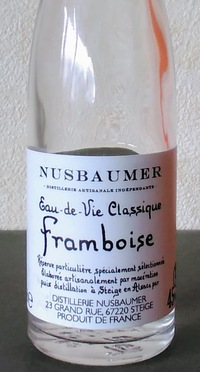
Picture of bottle Nusbaumer (Alsace, France) – Framboise (Raspberry), c. 2022, 45%

Continuing our exploration of Nusbaumer via their sets of miniatures. We greatly appreciate miniatures at Clear Libations. This is distilled from a maceration involving 8kg fruit per litre of alcohol.

Nose Moderate expressivity - I find some lemon, raspberry bushes, ethanol, forest fruit boiled sweets, bubblegum. The fruit is definitely there, but this is coming across like a maceration based spirit with its relative lightness.

Palate Good balance of mild sweetness and spice, somewhere between spearmint and cinnamon. Then we find a good bit of raspberry esteriness, both boiled sweets and fresh. The finish is medium, mostly remaining on raspberry notes. Guessing this is the Nusbaumer. (Ed: now you're showing off.)

Comments Decent, but leaves something to be desired. Not much change with water, maybe a touch more fruit on the palate.

Price around €45 per 70cl.

Score?5/10

Kirsch et Terroir, Ferme Chassard (Haute-Saône, France) – Framboise (Raspberry), c. 1990, 45%
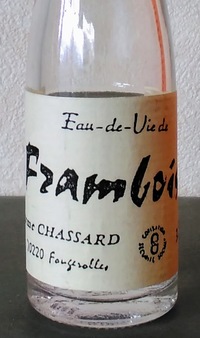
Picture of bottle Kirsch et Terroir, Ferme Chassard (Haute-Saône, France) – Framboise (Raspberry), c. 1990, 45%

Another older miniature, with good fill, from this collective of small producers. We really enjoyed their plum...

Nose Oh, weird. This is fishy, particularly anchovy, brine. Beyond that, some raspberry jam, but it's hard to smell past the fish (methanol?). Don't mind a bit of that in the right context, but not with my raspberry jam.

Palate Not much better here. Flat on the arrival, there is more of the brine and anchovy at first. The finish clings on for a bit and here we find fleeting touches of fresh raspberry.

Comments Something has gone wrong here I think, only the finish redeems it slightly. Couldn't finish it. This is a shame, because we greatly enjoyed some of Ferme Chassard's other offerings, and found a family resemblance in them which is totally absent here.

Price Unknown

Score?2/10

Rochelt (Tyrol, Austria) – Waldhimbeere (Wild Raspberry), L. 8/21, 52%
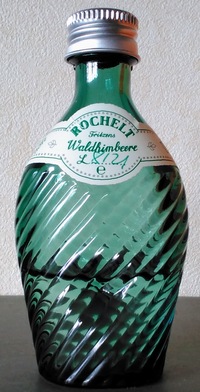
Picture of bottle Rochelt (Tyrol, Austria) – Waldhimbeere (Wild Raspberry), L. 8/21, 52%

Always a pleasure to have Rochelt on the tasting table. Interesting that they have chosen 52% here, over the usual 50%. This is a pure fruit mash, no maceration - the claim is that up to 60kg of raspberries per litre of product are needed. Correspondingly, I believe this is the priciest bottle from this pricy producer. This should be either the 2013 (matured 7 years in glass) or 2016 (matured 5 years in glass).

Nose This is lovely. Very aromatic raspberry, fresh this time, as if I were in a raspberry warehouse in summer. A lot of rosewater, perhaps a few blackberries? Lemon drizzle cake, soft cinnamon, spearmint. Overall this is comparable to [the Gölles] but a bit fresher and richer. Can take a drop of water, becomes slightly misty, and slightly sweeter.

Palate Quite some weight here, very floral at first (rose), then rather grippy and citrussy (lots of lemon zest, a little pith), with some bitterness (leaves?). Some nuttiness on the midpalate, acidic fresh raspberry, seeds. Long finish, with lemon drizzle cake, fresh raspberries. It does take a drop of water, which gives everything more room.

Comments If you are expecting pure raspberry on the palate, you are going in with the wrong mindset. I adore this nose, the palate is more challenging but still very good.

Price around €350 per 35cl.

Score?7/10

Massenez (Alsace, France) – Framboise Sauvage (Wild Raspberry), c. 1990, 43%
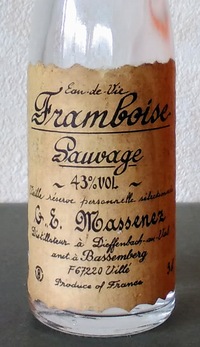
Picture of bottle Massenez (Alsace, France) – Framboise Sauvage (Wild Raspberry), c. 1990, 43%

An older miniature with a good fill level from this well known producer.

Nose This one is fairly neutral. If I'm reaching, there are some berries in the far distance, a little mustiness.

Palate Again, quite neutral. There is some sweetness and a little mustiness, and eventually a little raspberry in the finish. Nothing offensive here, just not a lot either.

Comments Again, this is an older miniature, and may not represent today's bottlings.

Price Unknown

Score?3/10

Gölles (Styria, Austria) – Himbeer (Raspberry), L. 2017, 43%
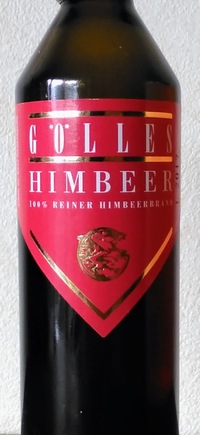
Picture of bottle Gölles (Styria, Austria) – Himbeer (Raspberry), L. 2017, 43%

Why have we tasted so many Gölles? Are we on the take? No - we were rather impressed by one or two, and so swiftly bought almost the entire range in 50ml miniatures. Here, 29kg of fruit per litre are claimed - this is another fermented mash.

Nose Another strong impression with this one, just behind [the Rochelt]. Very aromatic fresh raspberries, quite perfumed, perhaps a touch of rose or raspberry blossom. Victoria sponge, with raspberry jam, naturally. Camomile too.

Palate Moderate arrival. Some decent grip here, very pleasant spice (cinnamon? marjoram?), rosewater, camomile, sweet raspberry. Really very floral overall, almost soapy in places (but nice). Finish is medium, with a little more sweetness (sugar cane?), and fresh raspberry coming more to the fore. Just a hair thin here and there.

Comments As with the Rochelt, I prefer the nose to the palate, but both are very good. Water doesn't change much. With a little higher proof, this might be on par with the Rochelt - it's not too far behind as things stand.

Price around €93 per 35cl.

Score?7-/10
Mirabelle Miracle

September 29, 2023

The season is now over, but having spent some time in France during its height, we've had our share of mirabelle this year. Now let's have a few in the glass, semi-blind.

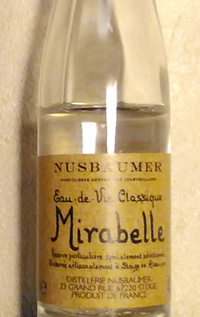
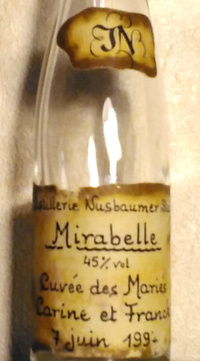
Nusbaumer (Alsace, France) – Mirabelle, 'Cuvée des Mariés', bott. 1997, 45%

Picture of bottle Nusbaumer (Alsace, France) – Mirabelle, 'Cuvée des Mariés', bott. 1997, 45%

An old wedding miniature from 1997. Belated congratulations to Carine and Franck as we tuck into this one...

Nose Slightly bready, musty, peach yoghurt, a few underripe crunchy mirabelles. Volume is a bit low here, but nice enough. Water is not beneficial.

Palate Good arrival, much more floral here (toward washing powder?), and again some yoghurt. Those crunchy mirabelles come out on the midpalate and into the finish. Again, water not doing much.

Comments Fine, but nothing too exciting. Little bit washed out, and I don't love the washing powder florality. Maybe not stored in the best conditions (light?).

Price Unknown

Score?4/10

Nusbaumer (Alsace, France) – Mirabelle, c. 2022, 45%

Picture of bottle Nusbaumer (Alsace, France) – Mirabelle, c. 2022, 45%

The label has been modernized, but retains some characteristics of the old. Proof remains the same, how do the contents fare?

Nose This one is now rather floral, with violets predominating. There is also a layer of fruit, perhaps more towards mirabelle jam, perhaps even pie. Interesting mixture, I like it. Water doesn't do much here.

Palate More brutish here, quite a hot hit of underripe mirabelle and white pepper. The finish is medium, with the violets coming in slightly. Water does tame things, allowing the fruit to shine more, but does not add much.

Comments The palate lets things down a bit. I find it too hot without water, but a solid dram all round.

Price around €40 per 70cl.

Score?5/10

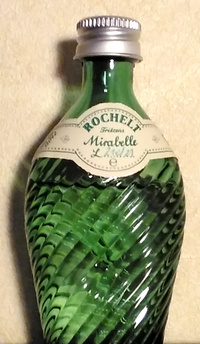
Rochelt (Tyrol, Austria) – Mirabelle, L. 210/21, 50%

Picture of bottle Rochelt (Tyrol, Austria) – Mirabelle, L. 210/21, 50%

Going by the bottling date of 2021, this should be the 2008, aged 13 years in glass.

Nose Far more expressive than [the Nusbaumers]. Reminding me of Gölles' Kriecherl a bit, with rather vibrant, slightly musky plums and a tiny touch of rubber. This is very good, there is a streak of acid and an impression of tannic skins, but also ripe fruit and fine perfume.

Palate The delivery here is excellent, lush and full with just enough grip. Very big, with a voluble fruitiness: underripe and ripe mirabelles, skin, stone. Hints of petrol, iodine, petrichor, pencil eraser. Good texture throughout, very oily and mouthcoating. The finish is long, very mineralic, with more fruit stones.

Comments The easy standout here, and I prefer it without water. The price, of course, is sky high.

Price around €250 per 70cl.

Score?8/10

Hedge Finds

September 21, 2023

Today the theme is blackberry, wood-fired stills, and a price point around €40 per 50cl. Tasted semiblind.

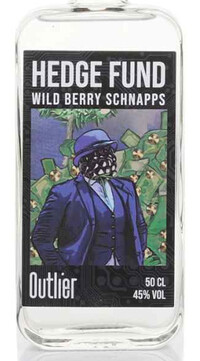
Outlier (Andreas, Isle of Man) – Hedge Fund (Blackberry and Elderberry), c. 2022, 45%

Picture of bottle Outlier (Andreas, Isle of Man) – Hedge Fund (Blackberry and Elderberry), c. 2022, 45%

A fairly new outfit on the Isle of Man, who also produce rum on their wood-fired still. The rum has made some waves, so we hope to try that as well.

Nose Sweeter and more generous, between the two. Elderflower, honeysuckle, brambles, and yes, ripe blackberries.

Palate Arrives smoothly. More on orchard fruit at first, ripe apples and pears, but also berries - particularly sweet blackberries but also a touch of raspberry, all alongside that floral sweetness. Gains slightly more bitterness, with touches of seeds/pips, and gains a little tartness in the finish, which goes on quite long.

Comments Fair price, and high quality. A distillery to keep an eye on. Maybe a touch flabby, but this is nitpicking. Easy sipper and the mixologists should be having a field (blend) day.

Price around €40 per 50cl.

Score?6/10

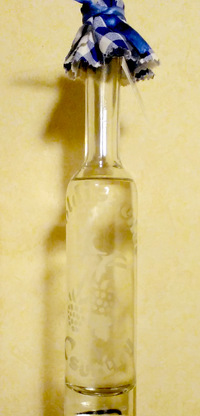
Bakonyi Íz és Párlat (Veszprém, Hungary) – Földiszeder (Wild Blackberry) párlat, 2008/2021, 50%

Picture of bottle Bakonyi Íz és Párlat (Veszprém, Hungary) – Földiszeder (Wild Blackberry) párlat, 2008/2021, 50%

Also known as Csetény pálinka, after the village where the distillery is located. I'm not sure why this is labelled párlat instead of pálinka, perhaps the fruit was imported? The label suggests this rested for 13 years before being bottled. I love the presentation with the etched glass and fabric top.

Nose More tart and narrow, blackberry sorbet, pips. A very pronounced florality too, magnolia and lemon verbena.

Palate Certainly tighter than [the Outlier] and more floral, lots of magnolia hand soap (though without soapiness, if that makes sense). Some effervescence, then more fruit emerging, a few overripe blackberries, blackberry yoghurt. The ABV helps with the finish, which is quite long, without development.

Comments A very different profile, tipping way towards floral at the expense of fruit. Well made, but I would prefer less magnolia here.

Price around €43 per 50cl.

Score?5/10

Rowanberry Redux

September 10, 2023

Rowanberry was our first line-up on Clear Libations, and it's a distillate I'm always keen to try. I have an hypothesis that conventionally less palatable fruits have a lot of potential as eau de vie. Moreover, they are in season. So today we have two of Austria's finest, along with an old miniature from Théo Preiss in Alsace. These were tasted and score semi-blind as usual, with some Reisetbauer on the side as control.

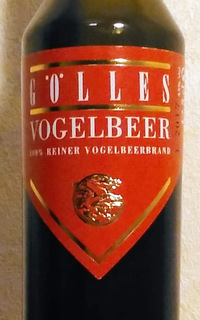
Gölles (Styria, Austria) – Vogelbeer (Rowanberry), L. 2017, 43%

Picture of bottle Gölles (Styria, Austria) – Vogelbeer (Rowanberry), L. 2017, 43%

Gölles claim 29kg of berries per litre. The brandy is released after 2 years of aging in glass balloon.

Nose Good start. This is quite a rich and full nose. Marzipan predominates, but is not overbearing, being balanced off by the more tart side of ripe rowans. That tartness almost verges on a slight whiff of vinegar, which I find very nice.

Palate Smooth delivery (not necessarily good or bad in our book, just means the attack is gentle). Glides in, then shows some grip after a second. Gently spicy, rich taste of tart rowanberries balanced beautifully against the sweetness of its buds and blossom. Sweet grapefruits, white pepper and other fruity spices. It's a touch thin in places perhaps, but the finish is fairly long, with a mild sweetness.

Comments This is great, not hugely complex but very satisfying and drinkable.

Price around €90 per 35cl.

Score?7/10

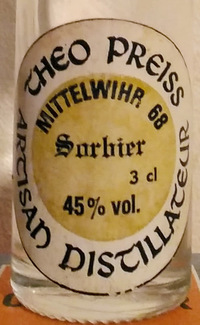
Théo Preiss (Alsace, France) – Sorbier (Rowanberry), c. 1990, 45%

Picture of bottle Théo Preiss (Alsace, France) – Sorbier (Rowanberry), c. 1990, 45%

Théo Preiss are an old operation in Mittelwihr, still producing quite a range of eaux de vie. This is an old miniature, probably from the 90s or 80s, with a cm or so of evaporation. Possibly not the best storage conditions. Purchased recently in the little treasure trove Le Temps Du Vin in Bergerac. Why review such a thing? Well, we are charting the world of eaux de vie, which includes all extant bottles. This is neither a buyer's guide nor an exercise in flattery. Of course, for old bottles, condition may vary.

Nose Rather quieter here, seeming a bit diluted or distant. There is some tart red fruit, towards currants, and almonds for sure (almond flour?), orange juice, far off marzipan. So there is some typicity, but just not much jumping out.

Palate Better here, but still a bit flat. Faded lemon and lime syrup, some astringent rowans, some mustiness. Finish is fairly short, but has a bit of astringent bite, which I like.

Comments Palate redeems things a bit. Not bad. Take the score with our caveats in mind.

Price Unknown

Score?4/10

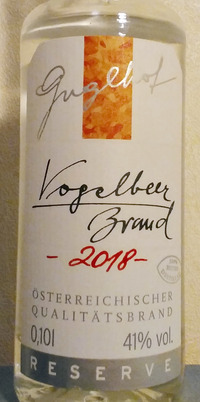
Guglhof (Salzburg, Austria) – Vogelbeer (Rowanberry), Reserve 2018, 41%

Picture of bottle Guglhof (Salzburg, Austria) – Vogelbeer (Rowanberry), Reserve 2018, 41%

Supposedly the oldest distillery in Austria, tracing its history back to 1641. Its reputation is rather high, so I was excited to have this one in the line up.

Nose This one is again rather nice. It has less marzipan than [the Gölles], and is more on tart fruits: rowanberry but also cranberry. A hint of something almost sulphurous, like a struck match, but it works. Foliage, cherry menthol lozenges, oyster mushrooms. Shows some complexity, although lacks a bit of power to really back that up.

Palate Again, smooth delivery. Then certainly some grip, very mild almond sweetness balanced with rowanberry astringency. Quite a long development, lots of sweet citrus, a hint of iodine, those menthol cherry lozenges again. Develops on sweet flowers and foliage. The finish is quite long and pleasantly bittersweet, just as if we had chewed some very fine rowanberries.

Comments Again, really good stuff here and it edges ahead of Gölles. I can only imagine what it would do at higher proof.

Price around €60 per 35cl.

Score?7+/10

Big Apricot Blind

August 22, 2023

Apricot is another giant that we have yet to tackle, so let's have a giant session: semiblind, of course.

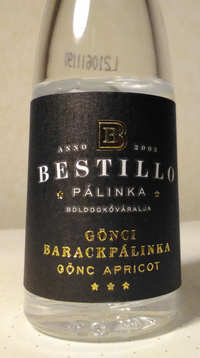
Bestillo (Borsod-Abaúj-Zemplén, Hungary) – Gönci Barack (Gönc Apricot) Pálinka, L210611190, 40%

Picture of bottle Bestillo (Borsod-Abaúj-Zemplén, Hungary) – Gönci Barack (Gönc Apricot) Pálinka, L210611190, 40%

These apricots have a famous PDO. Definitely an A-list apricot. Accordingly, this is Bestillo's flagship product.

Nose A good start. Apricot is up front, fairly rich and round but a rather perfumed expression of apricot. It's fruity first, but with a definite floral tint, let's say apricot blossom (though truthfully it's not a smell I know well). A touch of cream, play-doh, plasticine, hint of cat pee. There's some tension, between alcohol, effervescence, minerality, and a little salt. Pretty elegant, although lacking a bit of power.

Palate Quite a light body, lighter than expected. Apart from that, it mostly follows the nose albeit with less expressivity. Floral leaning, fuzzy apricots, a bit of fizz and salt, and quite a short finish. Feels a bit diluted, and somewhat disappointing compared to the nose.

Comments It's a shame that the palate couldn't meet the nose. The score meets them in the middle. Water kills it pretty fast, unsurprisingly. Hungarians tend to say that homemade pálinka can't hold a candle to commercial products. I wonder how much of that comes down to overly aggressive dilution (which is less '40% bad', than 'cutting to an arbitrary point bad', in my view).

Price around €43 per 70cl.

Score?6/10

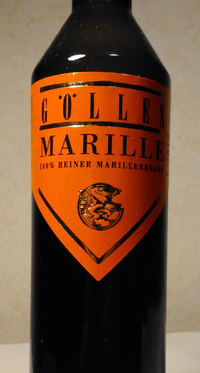
Gölles (Styria, Austria) – Marille (Apricot), L. 2019, 43%

Picture of bottle Gölles (Styria, Austria) – Marille (Apricot), L. 2019, 43%

Interestingly, the apricots used here are known as Ungarische Beste – Hungarian Best. According to Gölles, Wachau is amongst the other names for this varietal. So we are really in the shadow of Hungary across the board here.

Nose This one is a bit more assertive than [the Bestillo], slightly louder and presenting a slightly more underripe fruit, and less florality. There's still a lot of ripe fruit in there too, but there is a more acid. There is a slight rubber note that reminds me of the Gölles Kriecherl, but it's not unpleasant (Ed: yep, this is the Gölles indeed). It's even a touch petrolic too, in a good way.

Palate Good grip now, powerful delivery. There is a good balance of mild sweetness and acid. It delivers the apricot similarly to the nose, leaning underripe, perhaps a bit more blossom, and that hint of rubber again (but it works). Rather mineralic finish, with tension remaining. This is great.

Comments It's not the best expression of apricot, but that's not how we judge things here necessarily.

Price around €80 per 70cl.

Score?7/10

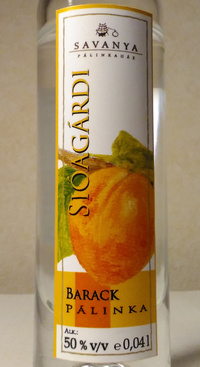
Savanya (Tolna, Hungary) – Barack (Apricot) Pálinka 'Sióagárdi', L. 2109162, 50%

Picture of bottle Savanya (Tolna, Hungary) – Barack (Apricot) Pálinka 'Sióagárdi', L. 2109162, 50%

The last two we tasted from Savanya were a little underwhelming, even while the beetroot was pretty fun. So I thought this one would stand out, and it did - in the opposite way! Batch variation may be an issue here, as another tasting did not like this expression.

Nose This is a touch rawer still, but not in a bad way. Actually I'm primarily getting physalis and starfruit, followed by a lot of apricot tea (a mix of light black tea and dried apricot perhaps). Nice acidity. Apricot stones too. Not a lot of notes, but not simple either - nice to nose.

Palate Very elegant delivery, there is a lot of grip seemlessly transitioning into a rather luscious mouthfeel. This one is rather powerful and mouth-coating, but again not super 'apricot' driven. I find starfruit again certainly, blossom, perhaps handcream? It transitions into quite a powerfully mineralic, long finish, with hints of that apricot tea. The balance here is great, it is dry, but with a great texture and just enough sweetness. Takes some water, but perhaps best at strength.

Comments Wow! I'm glad Savanya could redeem itself after that rather lackluster cherry. Not a very classical expression of apricot, but who cares? Texture will always win me over, by the way. What a value too.

Price around €22 per 50cl.

Score?7+/10

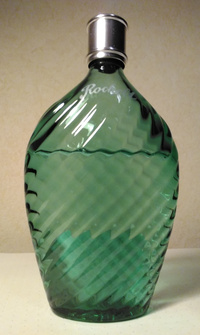
Rochelt (Tyrol, Austria) – Wachauer Marille (Wachau Apricot), L. 11/22, 50%

Picture of bottle Rochelt (Tyrol, Austria) – Wachauer Marille (Wachau Apricot), L. 11/22, 50%

Another famous PDO, and as we said above, actually an Hungarian varietal in disguise. Going by the lot code, this should be the 2014 vintage, aged 7 years.

Nose This one is fairly similar to [the Bestillo] at first nose. Apricot blossom, a little high quality jam, a tiny bit of that "apricot tea". Clay, buttery croissant (with jam). A touch of earth and salt, bergamot, slightly gin-like. It's definitely a bit more fruit forward than [the Bestillo], and probably the best expression of apricot here.

Palate Another ballpark from [the Bestillo] here. The delivery is elegant. Here now I am getting a complete expression of apricot, including a bit of stone. The mouthfeel is rather large. It's delightfully ripe, but balanced by touches of greenness, and a bit of stem. Effervescent. Fine-boned yet riveting. I believe this is the Rochelt (full discloure: I've tasted before). It takes water, giving everything more space, but be sparing. The finish is quite long, and slightly botanical.

Comments A masterclass! This really captured the heart of the fruit. Also ten times the price of the Savanya. Very different profiles, mind.

Price around €300 per 70cl.

Score?8/10

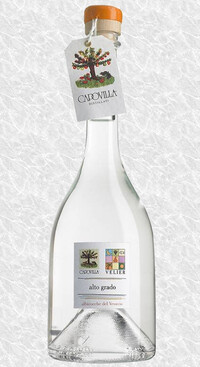
Capovilla (Veneto, Italy) – Abricot du Vesuve (Vesuvius Apricot), 49%

Picture of bottle Capovilla (Veneto, Italy) – Abricot du Vesuve (Vesuvius Apricot), 49%

The cream of Italy's crop? I tried to find out if Vesuvius apricots are also secretly Hungarian, but it seems not.

Nose Perhaps my least favourite nose on first contact, but not by far. I'm getting apricot gum, mixed tinned fruit and cream, some honey even. A little cardboard. Feels a touch closed. Water does help, revealing some lime zest, tea tannin and a little more sweetness.

Palate More interesting here for sure. Definitely on that 'juicy fruit' gum vibe, more candied apricot if anything. Quite a green element too, there is grass, lime peel, angelica. Candy puffed rice, and then lots of sweet limes in the medium finish. Water less beneficial here, but it takes a drop.

Comments Again, not very apricot-y but pretty interesting. Love those limes, less so the more candied, artificial fruit vibes. I hear the standard apricot at 60% is the one to go for.

Price around €131 per 50cl.

Score?7-/10